Sight Word Fluency Lesson Plan: Sentence Pyramids and Scrambles
- Kindergarten–1st Grade
- Fluency: high-frequency words
- 30 minutes
Sight words (high-frequency words like “the”, “said”, “was” and “there”) make up a large share of any text a young child reads. Recognizing them instantly frees up attention for decoding the harder words. Flash cards help, but children also need to read sight words inside sentences, at a natural pace.
This lesson focuses on three sight words per session and uses two activities: a sentence pyramid for reading and a scrambled sentence for building. It works with either the Dolch or the Fry list.
Objectives
- Read three target sight words automatically, in isolation and in sentences.
- Read a sentence containing the target words smoothly.
- Build a sentence from mixed-up words, using capital letters and end punctuation as clues.
What you need
- Three sight word cards (example: was, there, said)
- A sentence pyramid on the board or chart paper
- Word cards for a scrambled sentence, one set per pair
- Optional: printed sight word pyramids and scrambles
Word lists
- Example pyramid (was)
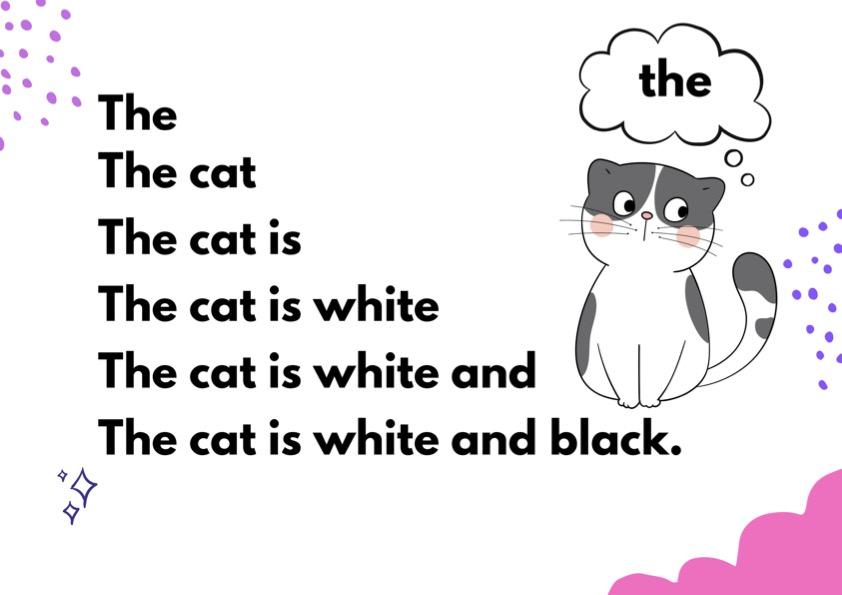
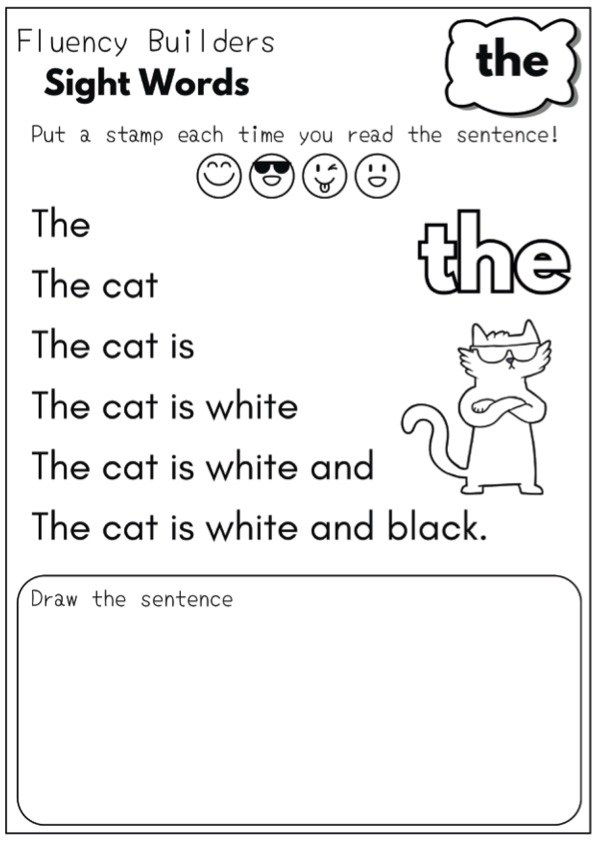
- It / It was / It was in / It was in the / It was in the box.
- Example scramble (there, said)
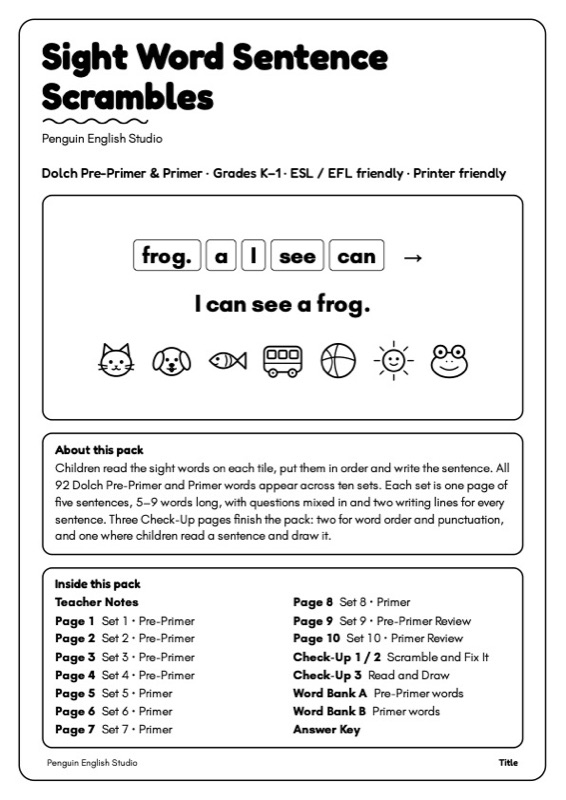
- said / “There / is / Mom. / a / cat,”
The lesson, step by step
1. Warm-up: flash and spell (5 min)
Show each target word. Children say it, spell it aloud while tapping their arm for each letter, then say it again. Then flash the three cards in random order, getting faster each round. Mix in two or three words from previous weeks.
Talk about any part of the word that doesn’t follow the usual rules. In “said”, the “ai” makes a short e sound. Pointing out the tricky part helps children remember it.
2. Sentence pyramid (8 min)
Read the pyramid for “was” together, line by line, sweeping a finger under each line. Then have children read it alone. Each line repeats the earlier words, so by the bottom children have read the target word five times without noticing.
Ask a child to read the last line “like you’re telling a friend”. Smooth phrasing is the goal.
3. Scrambled sentence (8 min)
Give each pair a set of word cards in a mixed-up order. Show them the two clues: the word with a capital letter usually goes first, and the word with a period or question mark goes last. Pairs arrange the cards, read the sentence aloud, and raise their hands to check.
Then they copy the sentence onto paper, including the capital letter and punctuation.
4. Sight word spotting (5 min)
Show a short paragraph from a book the class knows, or write one. Children find and count every “was”, “there” and “said”. Real books contain these words constantly, and spotting them makes the point better than telling.
5. Wrap-up (4 min)
Each child reads the three cards to you as fast as they can. Note any word they hesitate on for more practice next time.
Support and challenge
- Use one target word for children who need more time, and build the pyramid with only three lines.
- Give confident readers a scramble with a question (“Was the cat there?”) so they have to think about word order and the question mark.
Tips for ESL and EFL classes
- Make sure children know what the sight word means and how it’s used. “There” and “was” are easy to say but abstract, so use them in a simple spoken sentence with a gesture first.
- English word order (subject, verb, object) differs from many first languages, including Japanese. The scrambled sentences give useful grammar practice as well as reading practice.
How to check learning
- Can the child read the three target words in under three seconds each?
- Can they read the pyramid’s last line without pausing between words?
- Do they use the capital letter and punctuation to order a scrambled sentence?
What to teach next
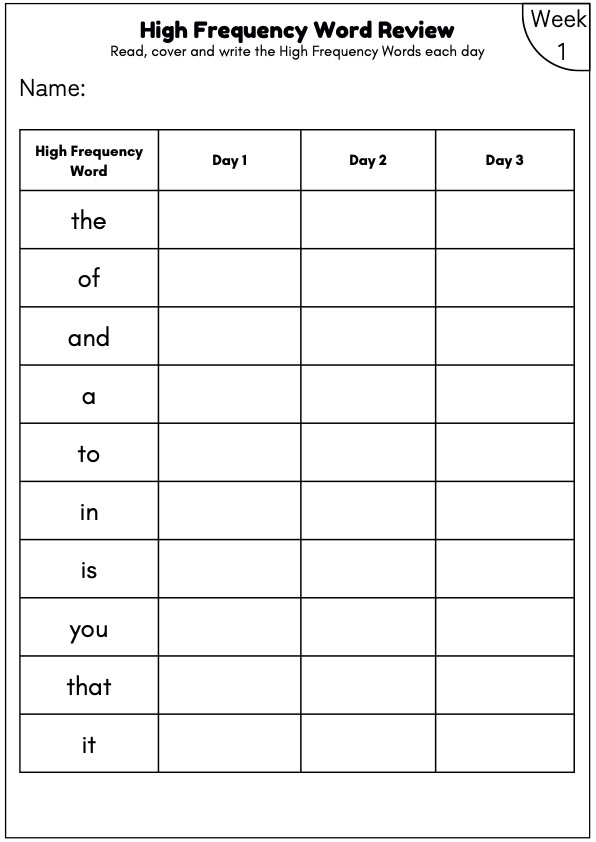
Repeat with three new words each session and review old ones in the warm-up. Every few weeks, time children reading a list of all the words learned so far to track progress.
Printables for this lesson
Optional. These Ribbit Pond worksheets match the lesson if you’d rather not make your own.