Months of the Year Lesson Plan for Kindergarten to 2nd Grade
- Kindergarten–2nd Grade
- Vocabulary: months and calendar
- 40 minutes
Children usually learn to recite the months as a list long before they know what a month is, which month comes after June, or that “May” needs a capital letter. This lesson moves from chanting the list to understanding it: ordering the months, linking them to seasons and events, and writing them correctly.
It suits kindergarten through 2nd grade. With younger children, focus on the first three steps; with older children, spend more time on writing.
Objectives
- Say the twelve months in order.
- Name the month that comes before or after a given month.
- Link months to their own birthday, seasons and events.
- Write month names with a capital letter.
What you need
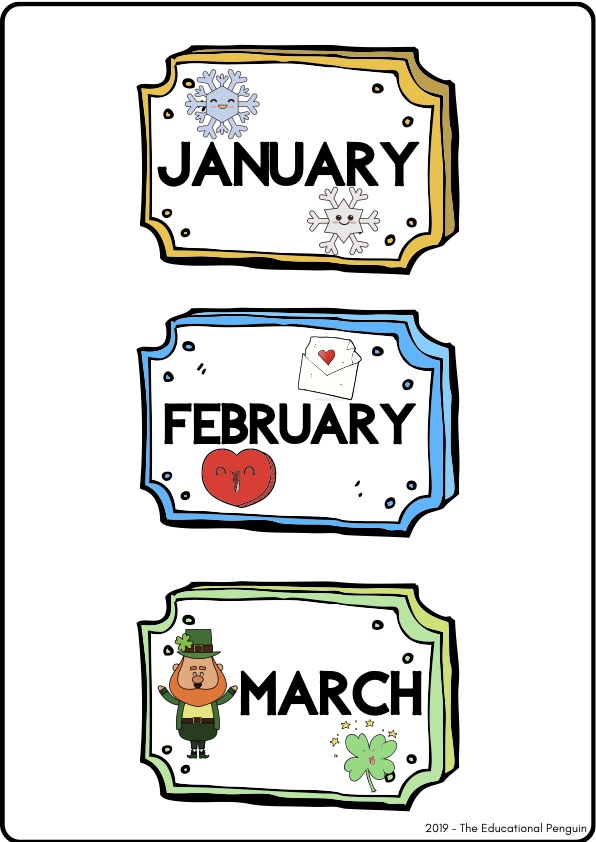
- Twelve month cards or posters
- A calendar for the current year
- Sticky notes
- Optional: months of the year worksheets, posters and a capitalization practice set
Word lists
- The months
- January, February, March, April, May, June, July, August, September, October, November, December
The lesson, step by step
1. Warm-up: chant (5 min)
Chant the months together with a clap on each one. Then try variations: whisper the winter months and shout the summer months, or stand up for your birthday month. Any familiar months song works too.
2. Twelve in a line (8 min)
Hand out the twelve month cards to twelve children. Without help, they arrange themselves in order at the front of the room while the class reads the cards and gives directions (“August, you need to move next to July!”). With a small class, give some children two cards.
Once the line is right, ask questions: “Who comes after March?” “Who comes before October?” The child holding that card raises it. Then mix the cards and give them to new children.
3. Birthday graph (8 min)
Put the month cards along the bottom of the board. Each child writes their name on a sticky note and puts it above their birthday month. Count the notes together: “Which month has the most birthdays? Which has none?”
This gives children a personal reason to remember at least one month, and it’s a simple math link.
4. Months and seasons (7 min)
Ask what happens in different months where you live: when it snows, when school starts, when there are holidays. Group the months into seasons on the board. Seasons depend on where you live, so describe your own local seasons rather than a textbook version.
5. Capital letters (8 min)
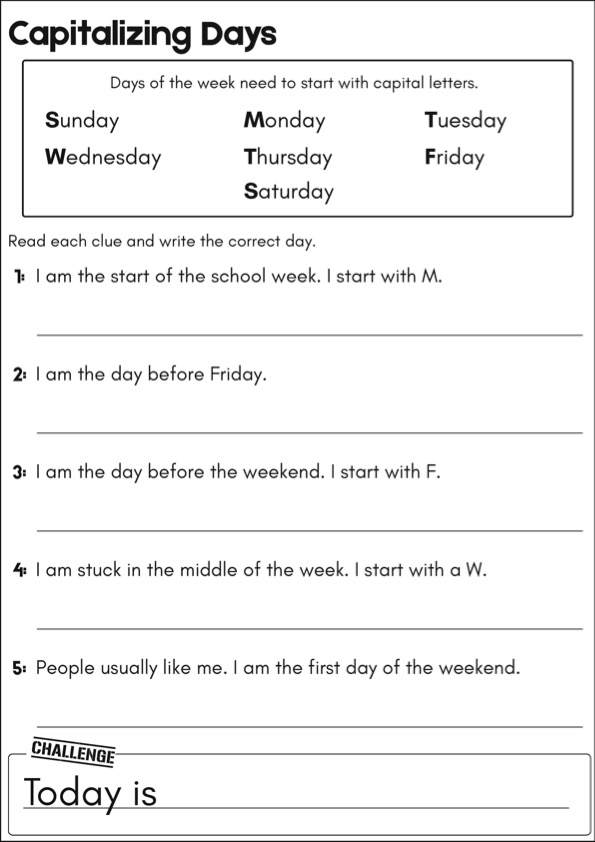
Write a sentence with mistakes: “my birthday is in july.” Children find two mistakes (the capital m and the capital j). Explain that months always start with a capital letter because they are names. Then children write “My birthday is in ___.” on paper and draw something they like to do in that month.
6. Wrap-up: what month is it? (4 min)
Look at the classroom calendar together. Ask: “What month is it now? What month was it last month? What month will it be next?” Make this a daily question at morning circle.
Support and challenge
- For younger children, focus on the chant, the line-up and their own birthday month.
- For older children, add ordinal numbers (“March is the third month”) and the number of days in each month.
Tips for ESL and EFL classes
- In Japanese and several other languages, months are numbered (1月, 2月 means “month one”, “month two”), so English month names are pure vocabulary to memorize. Linking each month to a picture or event helps.
- “February” is hard to say. Many native speakers say “Feb-yoo-ary”, which is fine to model for young learners.
How to check learning
- Can the child say the months in order without help?
- Can they answer “What comes after ___?” for a random month?
- Do they write their birthday month with a capital letter?
What to teach next
Ask the month questions daily at morning circle. Later in the week, add the days of the week and practice phrases like “Today is ___” and “Yesterday was ___”.
Printables for this lesson
Optional. These Ribbit Pond worksheets match the lesson if you’d rather not make your own.