CVC Fluency Lesson Plan: Building Sentences With Fluency Pyramids
- Kindergarten–1st Grade
- Fluency: CVC sentence reading
- 30 minutes
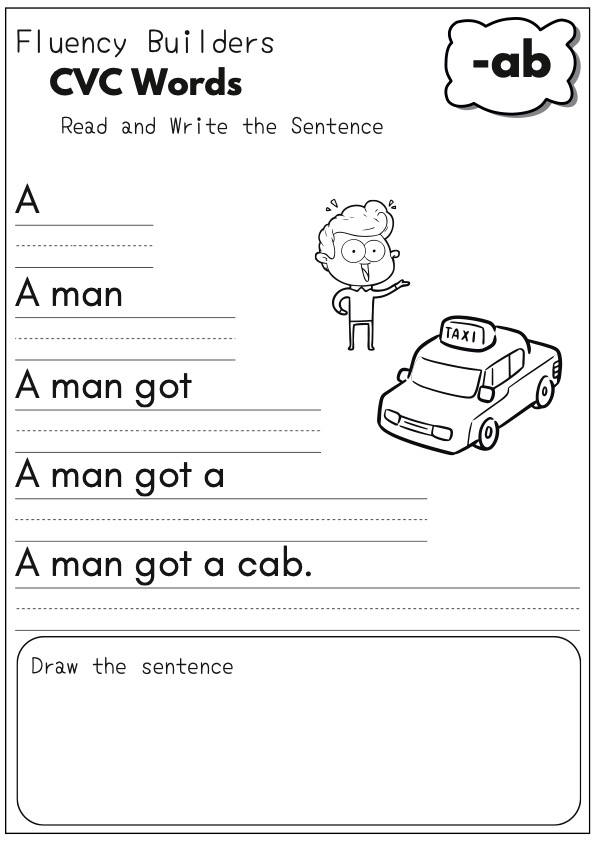
Children who can decode single CVC words often read sentences one slow word at a time: “The… cat… sat.” A fluency pyramid fixes this by building the sentence one word per line, so the child rereads the start of the sentence several times before reaching the end:
A / A rat / A rat sat / A rat sat on / A rat sat on a mat.
By the last line, most of the words have been read three or four times, and the child can focus on reading smoothly. This lesson teaches the pyramid routine so children can use it independently in centers.
Objectives
- Read a five or six-word decodable sentence smoothly, without stopping between words.
- Use the pyramid routine (read, reread, add a word) independently.
- Write and illustrate the finished sentence.
What you need
- Two or three pyramids written on the board or chart paper
- A timer
- Paper for children to write and draw their sentence
- Optional: printed CVC fluency pyramids, one per word family
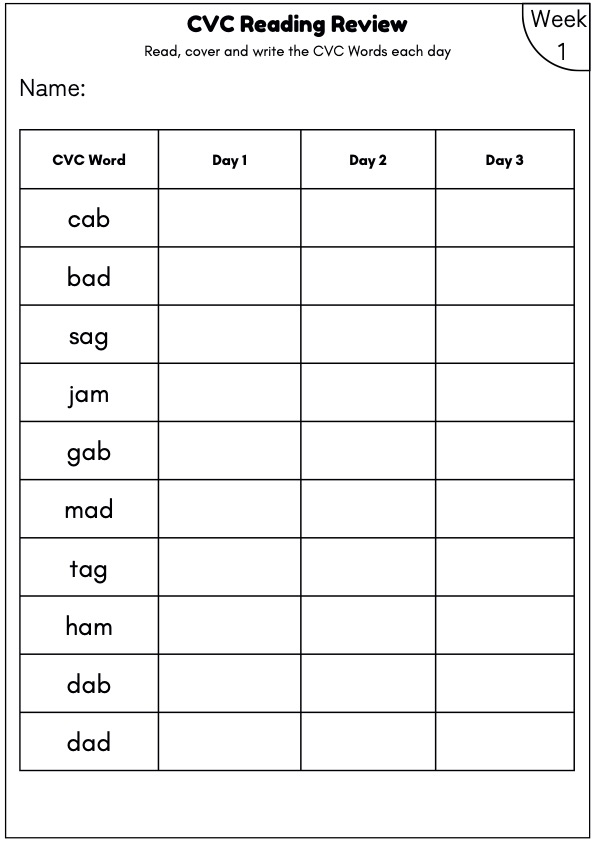
Word lists
- Sample pyramids
- A rat sat on a mat. / The big pig can dig. / Ten men get wet. / A fox is in a box. / The bug is on a rug.
The lesson, step by step
1. Model the routine (6 min)
Show the first pyramid. Read the top line, then the second line, pointing under each word. Read it the slow way first (“A… rat”) and then the smooth way (“A rat”). Ask children which sounded more like talking.
Read the rest of the pyramid the smooth way, sweeping your finger under each line instead of tapping each word. The sweep is the visual cue for “read it together”.
2. Echo and choral reading (6 min)
Read the second pyramid line by line, with the class echoing each line after you. Then read the whole pyramid together. Finally, have half the class read the odd lines and half read the even lines.
3. Partner pyramids (8 min)
Pairs take turns reading a third pyramid. One reads, the other points under the lines and listens. The listener gives one of two signals: a thumbs up for smooth reading, or a wiggly hand for “try that line again”.
Then set a timer for one minute and see how many times each child can read the whole pyramid. Most will read it three or four times. Ask them to notice that it gets easier each time.
4. Write and draw (7 min)
Children copy the last line of one pyramid and draw a picture to match. Check that their drawing shows the whole sentence (a rat, sitting, on a mat). That tells you they read for meaning, not only for speed.
5. Wrap-up (3 min)
Ask two or three volunteers to read their finished sentence to the class. Praise smooth reading and expression rather than speed alone.
Support and challenge
- For children still blending sound by sound, use pyramids with only three or four lines and words from one family.
- Faster readers can make their own pyramid from a sentence you give them, writing it one more word per line.
Tips for ESL and EFL classes
- Small words like “a”, “the” and “on” are easy to skip or mispronounce. The pyramid makes children read them many times, so point to them deliberately.
- Pyramids are a natural way to practice English sentence rhythm. Read with a little stress on the content words (“a RAT SAT on a MAT”) so children hear how English sentences sound.
How to check learning
- Can the child read the last line of a pyramid in one smooth phrase?
- Does their drawing match the meaning of the sentence?
- Can they run the routine with a partner without your help?
What to teach next
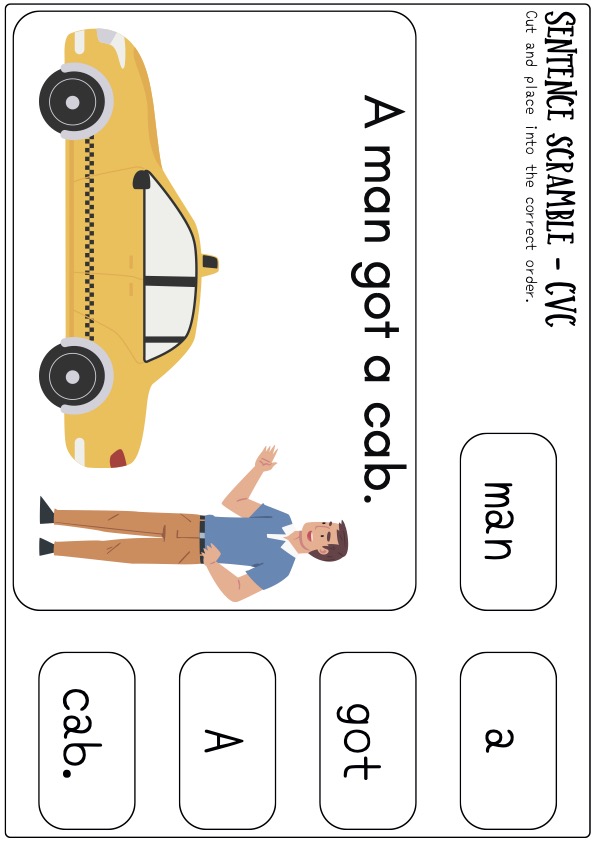
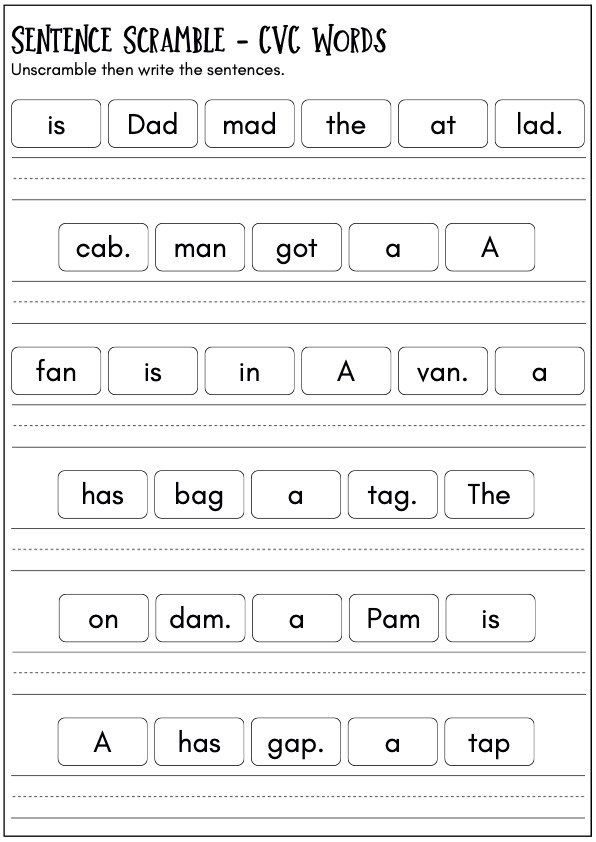
Add one pyramid to your literacy centers each day, working through the word families. Use a scrambled sentence activity later in the week so children build sentences themselves.
Printables for this lesson
Optional. These Ribbit Pond worksheets match the lesson if you’d rather not make your own.