CVC Decodable Stories Lesson Plan: First Reading With Short Vowel Readers
- Kindergarten–1st Grade
- Reading: decodable CVC text
- 35 minutes
A decodable story is made almost entirely of words a child can sound out with the phonics they already know. For a beginning reader that usually means CVC words with short vowels, plus a few high-frequency words like “the”, “is” and “a”. Reading a whole story, even a four-line one, is a different experience from reading a word list: the child has to keep track of meaning while decoding.
This plan is a guided reading lesson for a small group or a whole class, built around one short decodable story. You can write your own (an example is below) or use a printed decodable passage.
Objectives
- Read a short decodable story with accuracy, using sounding-out for unknown words.
- Find words from a target word family in the text.
- Answer simple questions about who, what and where in the story.
What you need
- One short decodable story per child (or written large on the board)
- Highlighters or colored pencils
- A pointer or finger puppet for tracking
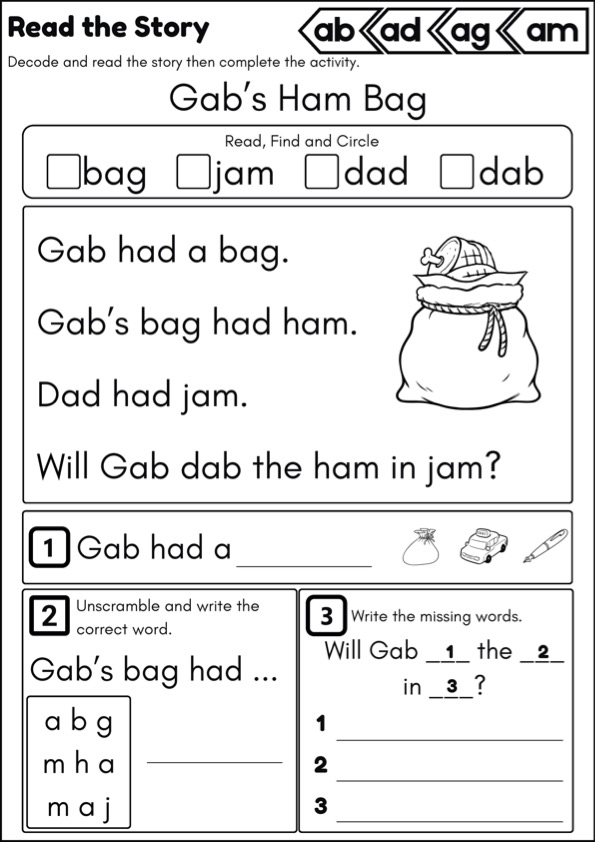
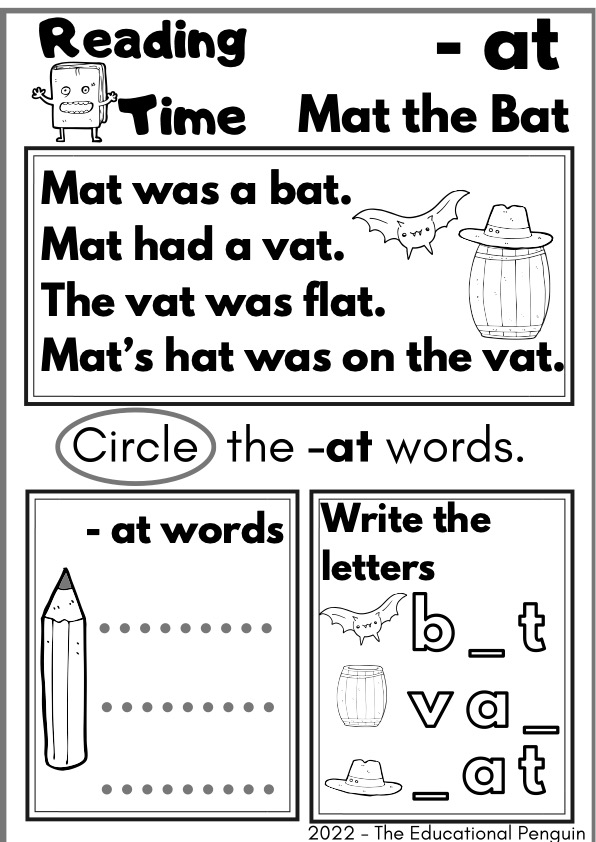
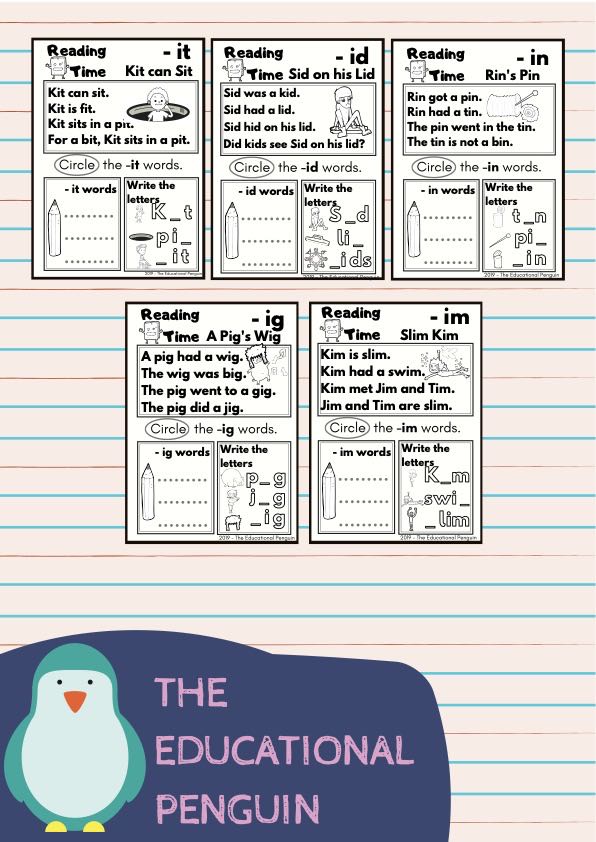
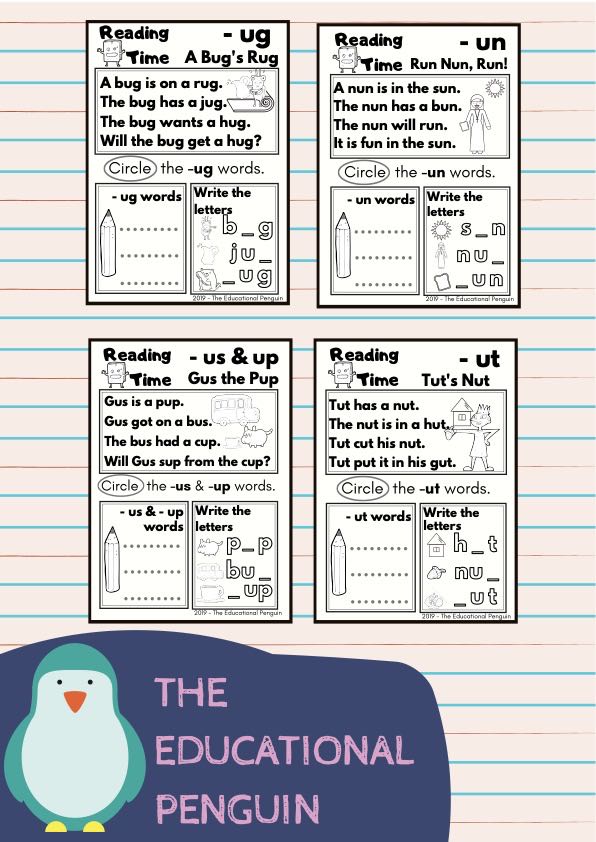
- Optional: CVC decodable story sets organized by word family
Word lists
- Example story (-ig and -in)
- Sid has a big pig. The pig can dig. The pig digs in a tin. Sid and the pig grin.
- Tricky words to pre-teach
- the, a, has, is, and
The lesson, step by step
1. Warm-up: word family flash (5 min)
Write the target families on the board (for the example story, -ig and -in) and read four or five words in each: big, pig, dig, wig; tin, pin, win, grin. Children read them chorally, then individually.
Then show the tricky words that can’t be sounded out yet. Read each one, spell it aloud together, and read it again. These are the words most likely to stop a beginning reader mid-story.
2. Picture walk and prediction (4 min)
Show the picture (or draw a quick pig and a tin). Ask: “Who do you think is in this story? What might happen?” Introduce the character’s name: names like Sid or Pam are decodable, but children don’t always recognize them as names, so say them first.
3. First read: whisper reading (7 min)
Each child reads the story quietly to themselves while pointing under each word. Move around the group and listen to each reader for one or two lines. When a child gets stuck, prompt with the strategy instead of the word:
- “Point to each sound and blend it.”
- “What family is that? You know -ig.”
- “Does that make sense? Read the sentence again.”
4. Word hunt (6 min)
Children highlight every word from the -ig family in one color and the -in family in another. Then they copy the words onto a short list. Ask: “How many -ig words did you find?” and compare answers. This sends them back into the text with a purpose and gives a second read without it feeling like repetition.
5. Partner reread (6 min)
Pairs read the story to each other, one sentence each, then swap. The second time through, ask them to read it “like a storyteller”, with expression.
6. Talk about it (7 min)
Ask three questions: one about a character (“Who has a pig?”), one about an event (“What does the pig do?”), and one that needs a little thinking (“Is the pig happy? How do you know?”). In the example story, “grin” is the clue. Children who finish early can draw the story and label it.
Support and challenge
- For children still decoding sound by sound, use a story with only one word family and three lines.
- For confident readers, use a mixed-vowel story, or ask them to write a new last line for the story using a family word.
- Group children by decoding level rather than age, so each group reads a story at the right level.
Tips for ESL and EFL classes
- Check vocabulary before reading: a child can decode “tin” perfectly and still not know what it means. Pictures and gestures work well.
- Keep comprehension questions short and offer sentence frames for answers: “Sid has a ___.” “The pig can ___.”
How to check learning
- Can the child read the story with 90% or more of the words correct?
- Do they use sounding-out or family knowledge on new words, rather than guessing from the picture?
- Can they answer the who and what questions in a full sentence?
What to teach next
Run this routine twice a week with a new story each time, working through the vowels in order. Keep finished stories in a book box so children can reread them for fluency.
Printables for this lesson
Optional. These Ribbit Pond worksheets match the lesson if you’d rather not make your own.