Consonant Blends Lesson Plan: BL, BR, CL and CR
- 1st–2nd Grade
- Phonics: initial consonant blends
- 40 minutes
A consonant blend is two consonants at the start of a word where you hear both sounds: b and l in “black”, c and r in “crab”. Children who read CVC words well often stumble on blends, because they drop one of the two sounds (“back” for “black”) or add a vowel between them (“bu-lack”).
This lesson covers four blends: bl, br, cl and cr. They pair well because children have to listen for l versus r as the second sound.
Objectives
- Read words that start with bl, br, cl and cr, pronouncing both consonants.
- Hear whether a word starts with an l blend or an r blend.
- Spell simple blend words such as crab, clap, brick and black.
What you need
- Four header cards: bl, br, cl, cr
- Picture cards for the word list
- Mini whiteboards
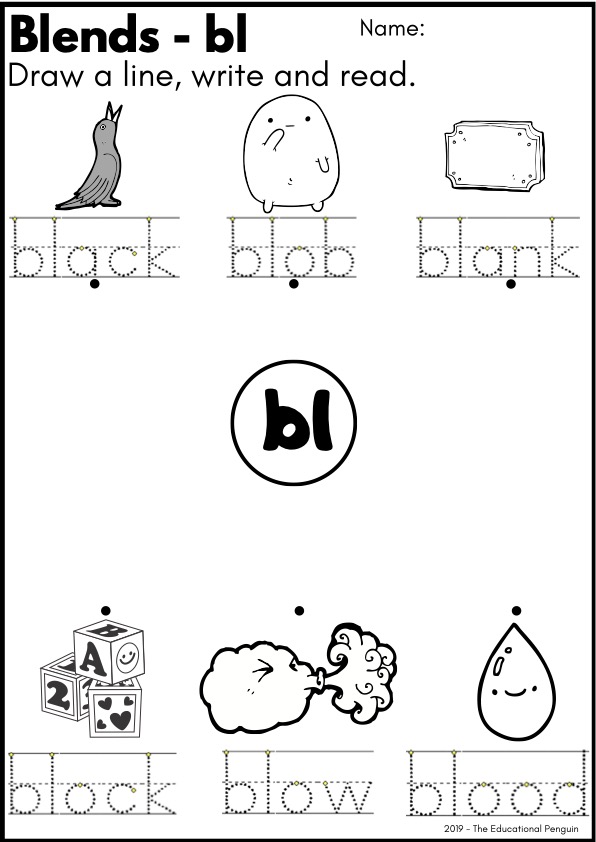
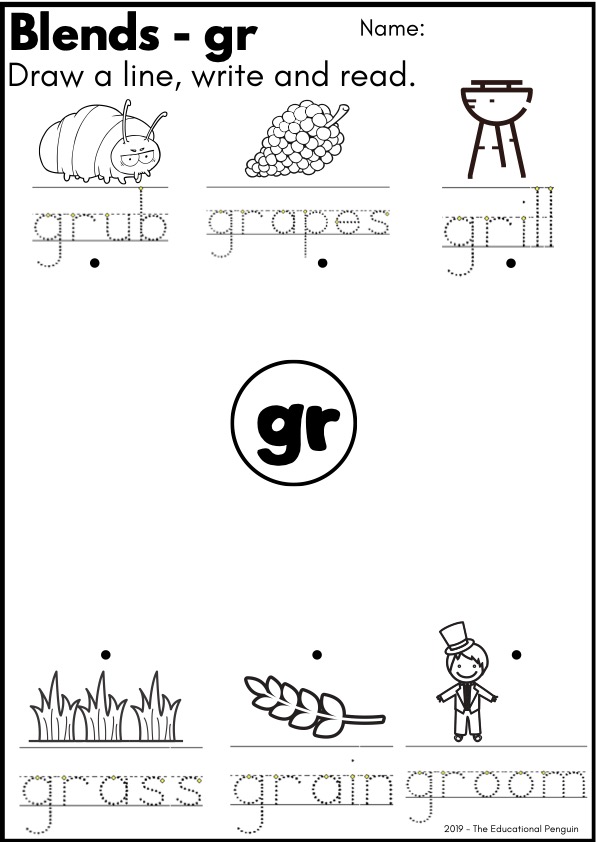
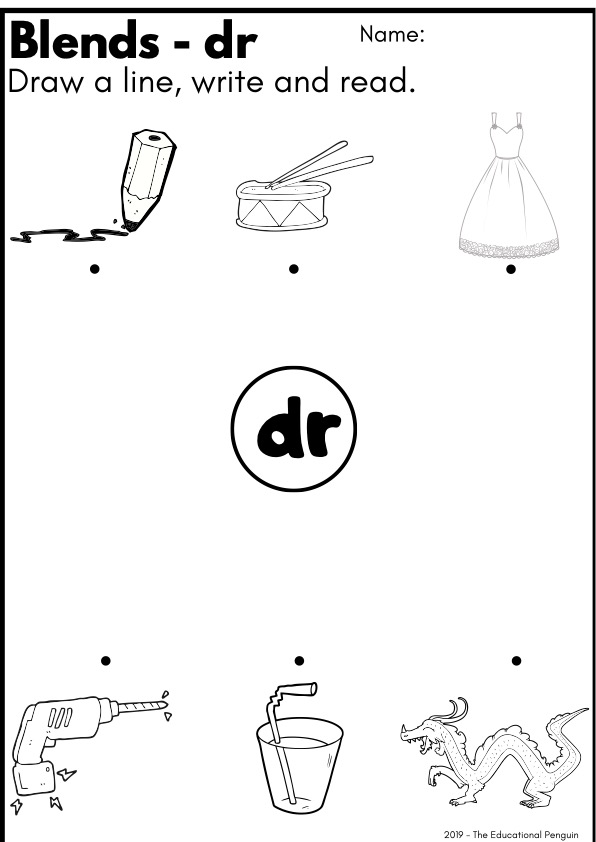
- Optional: blends worksheets and blend flash cards
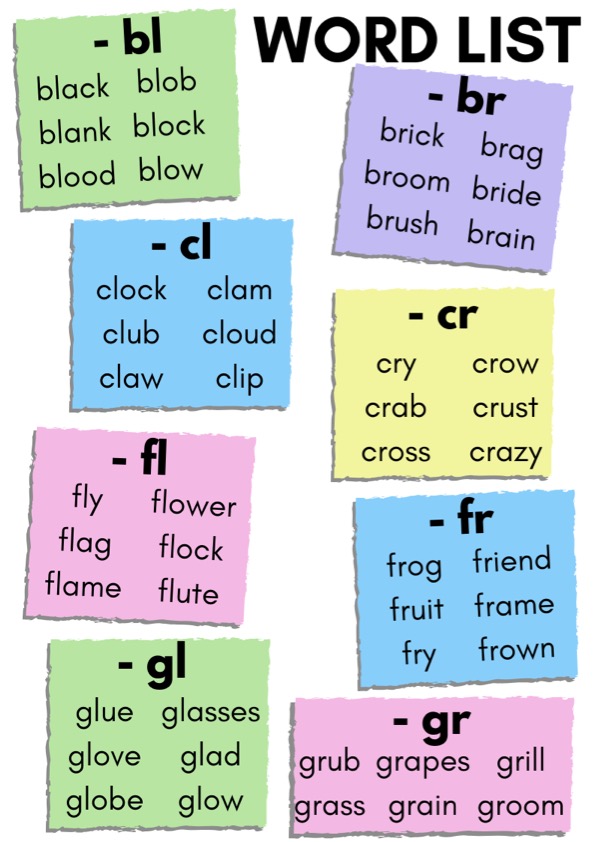
Word lists
- bl
- black, block, blue, blow, blink, blob
- br
- brick, bread, brush, bring, brown, branch
- cl
- clap, clock, cloud, clip, clown, class
- cr
- crab, crown, cry, crack, crib, crumb
The lesson, step by step
1. Warm-up: lock and block (5 min)
Say a word, then add a sound to the front: “lock… b-lock… block.” “rick… b-rick… brick.” “lap… c-lap… clap.” Children repeat each step. This shows them that a blend word is often a word they already know with one more sound on the front.
2. Teach the blends (10 min)
Write “bl” on the board. Say “b… l… bl” and then glide the two sounds together without a vowel in between: “bl”. Have children hold a hand in front of their mouth: the b gives a little puff, then the tongue goes up behind the teeth for l. Blend “bl… a… ck… black” and read the bl column.
Repeat for br, cl and cr. For the r blends, children should round their lips slightly for r; for the l blends, their tongue tip touches the ridge behind the top teeth.
- Read each column top to bottom.
- Read across the rows: black, brick, clap, crab.
- Point to random words for individual readers.
3. Blend sort (8 min)
Lay out the four header cards. Children take turns choosing a picture card, saying the word, and placing it under the right blend. Ask the class: “Do you hear l or r?” before the card goes down. The l versus r decision is the hard part, so give it time.
4. Tongue twister (5 min)
Teach one tongue twister: “A brown crab can clap a black block.” Say it slowly together, then faster. Children circle every blend word in the written version. Ask a few volunteers to try it alone. The aim is a clear blend at the start of each word, not speed.
5. Write the word (8 min)
Hold up a picture card (without the word) and have children write the word on their whiteboards: crab, clock, brush, blue, cry, brick. Say the word slowly with them before they write. Check that both consonants are there.
If a child writes “cab” for “crab”, have them say the word with a finger for each sound: c-r-a-b. Four sounds, four letters.
6. Wrap-up: blend detectives (4 min)
Give children 60 seconds to find anything in the classroom that starts with one of today’s blends (clock, blue pen, brush, crayons). They say the word and the blend aloud.
Support and challenge
- For children who struggle, teach bl and cl only (both l blends) in this lesson, and add the r blends next time.
- For strong readers, add two-syllable words like “blanket”, “cracker” and “broccoli”, or end blends such as -nd and -st.
Tips for ESL and EFL classes
- Learners whose first language doesn’t allow two consonants together, such as Japanese, often add a vowel between them: “burakku” for “black”. Practice the blend on its own (“bl, bl, bl”) before adding the rest of the word.
- The l / r contrast is hard for many East Asian learners. Don’t expect a perfect r sound in first grade, but make sure children can see and copy the different mouth shapes, and accept approximations when reading.
How to check learning
- Does the child pronounce both consonants in a blend word, with no added vowel?
- In the sort, can they place l blends and r blends correctly?
- Can they spell four out of six blend words in the writing task?
What to teach next
Use a short blends reading passage next lesson so children meet these words in sentences. Then move on to dr, fr, fl and tr, and later the s blends (sc, sk, sm, sn, sp, st, sw).
Printables for this lesson
Optional. These Ribbit Pond worksheets match the lesson if you’d rather not make your own.