CVC Word Families Lesson Plan: Teaching -at, -an and -ap in One Lesson
- Kindergarten–1st Grade
- Phonics: CVC word families
- 40 minutes
Word families are the point where most young readers stop sounding out every letter and start seeing chunks. Once a child can read “at”, they can read cat, hat, mat, rat and sat by changing one sound at the front. This plan teaches three short a families in one lesson: -at, -an and -ap.
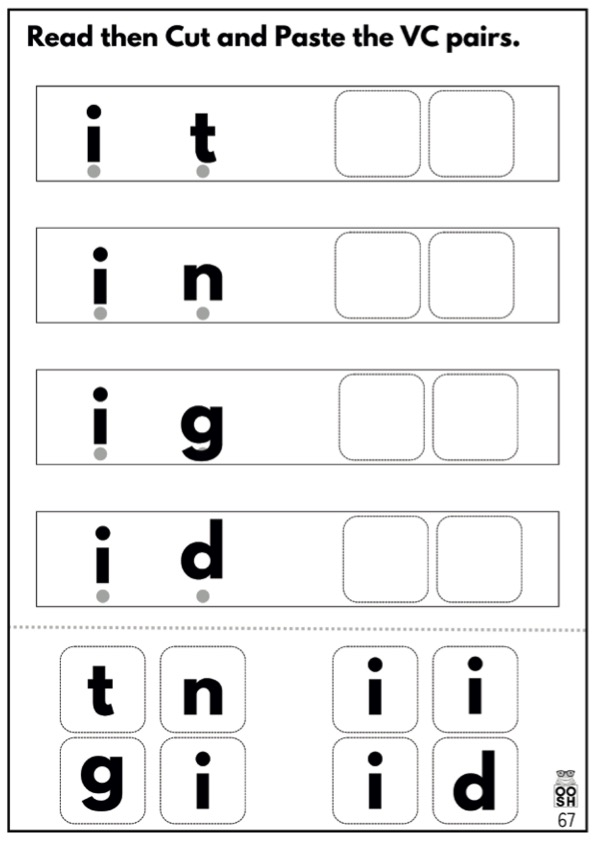
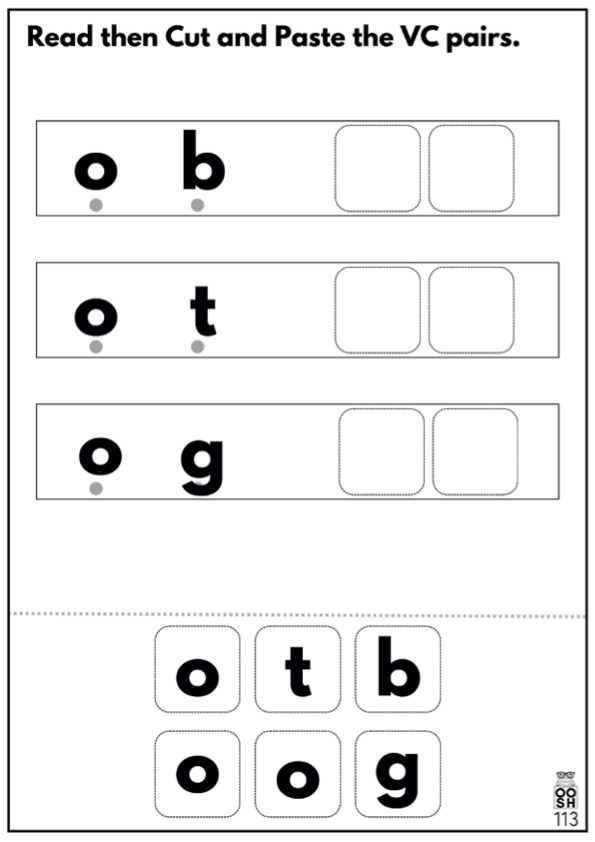
It assumes the children already know the letter sounds for a, c, f, h, m, n, p, r, s and t, and can blend a two-sound chunk like “a-t”. If they can’t yet, spend a lesson on oral blending first. The same plan works for any vowel: swap in -ig, -in and -it for short i, or -og, -op and -ot for short o.
Objectives
- Read and spell CVC words in the -at, -an and -ap families.
- Hear and say the rime (the vowel and final consonant) as one chunk.
- Sort words by family and explain how two words in a family are alike.
- Read a short decodable sentence made mostly of family words.
What you need
- Whiteboard, or a pocket chart with letter cards
- Three large header cards: -at, -an, -ap
- About 18 picture or word cards (list below), cut apart
- Mini whiteboards or scrap paper for each child
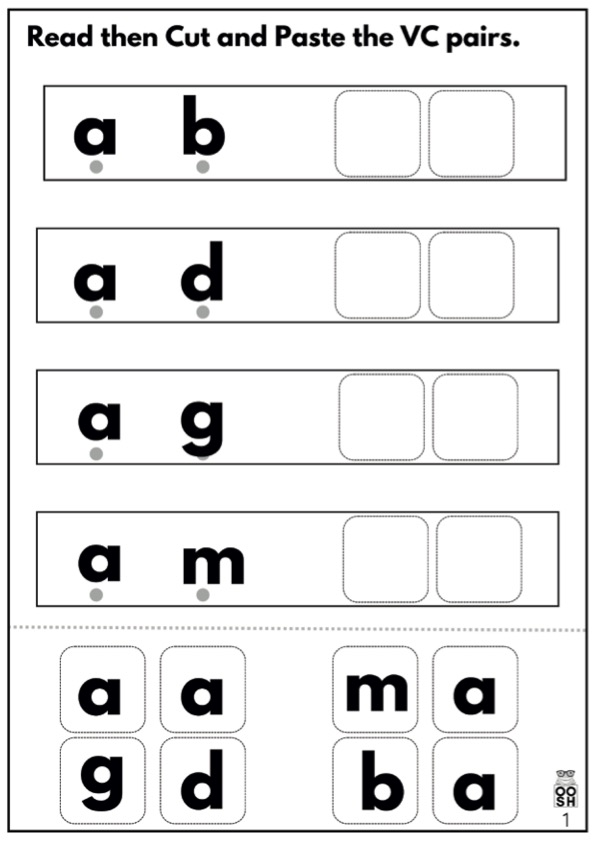
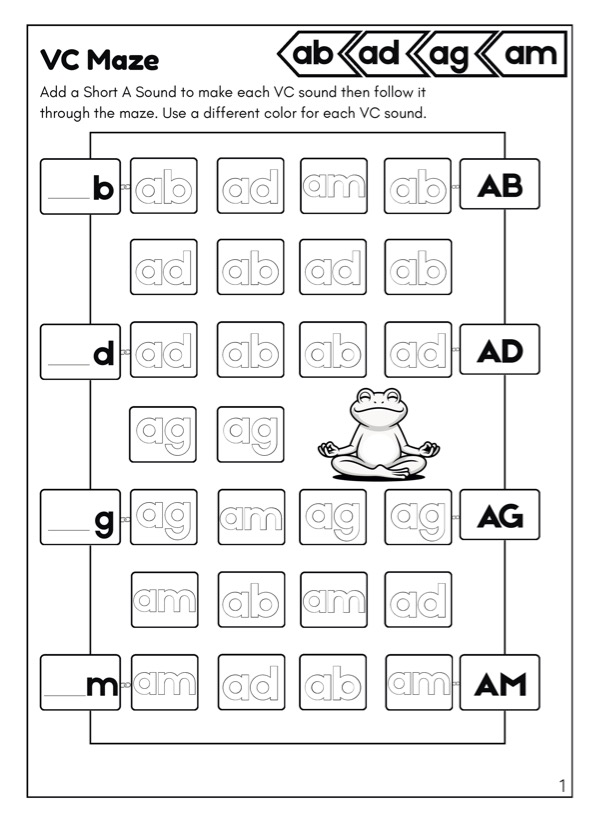
- Optional: a short a word family workbook for independent practice
Word lists
- -at
- cat, hat, mat, rat, sat, bat, fat, pat
- -an
- can, fan, man, pan, ran, van, tan
- -ap
- cap, map, nap, tap, lap, gap, sap
The lesson, step by step
1. Warm-up: rhyme or not? (5 min)
Say pairs of words and have children give a thumbs up if they rhyme and a thumbs down if they don’t: cat / hat, cat / cap, man / van, map / mop, tap / nap. Keep it quick and oral. You are tuning their ears to the end of the word, which is where a word family lives.
Finish by asking one child to say a word that rhymes with “fan”. Accept nonsense words like “zan”. A made-up word that rhymes shows they’ve heard the pattern.
2. Teach the chunk (8 min)
Write “at” on the board. Say “a… t… at” and sweep your finger under it. Have the class repeat. Then put a letter in front: “c… at… cat.” Keep the rime as one chunk and blend the first sound onto it. Do the same with h, m, r and s.
Repeat for -an and -ap. On the third family, let children call out the starting letter and do the blending themselves while you write.
- Point to the rime and say: “This part stays the same. Only the first sound changes.”
- Read the column top to bottom, then bottom to top, then in a random order.
- Ask: “What do cat, hat and mat have in common?” Aim for an answer like “they all end in -at”.
3. Word family sort (8 min)
Put the three header cards on the floor or in the pocket chart. Hand out the picture or word cards, one or two per child. Each child reads their card aloud and places it under the right family. The class checks with a thumbs up.
Mix in two or three words from other families (cot, pig) as “odd ones out”. Children who get one say “It doesn’t belong” and explain why. That explanation is where you’ll hear whether they really understand the idea of a rime.
4. Build it, change it (7 min)
Children write “cat” on their mini whiteboards. Call out a change and have them rewrite and read: “Change c to m.” (mat) “Change t to p.” (map) “Change p to n.” (man) “Change m to f.” (fan) “Change n to t.” (fat).
Changing the last sound moves the word into a different family, which makes this harder than it sounds. Go slowly, and have children say each new word before they write it.
5. Read a decodable sentence (6 min)
Write one or two sentences on the board that use the families: “The fat cat sat on a map.” “A man ran to the van.” Children read them chorally, then in pairs, pointing under each word.
Ask a simple comprehension question (“Where did the cat sit?”) so reading stays connected to meaning, even at this stage.
6. Wrap-up: exit word (6 min)
Each child writes one word from any of today’s families on a sticky note and reads it to you on the way out, or sticks it on the matching header card. This gives you a quick, visible check of who can spell a family word independently.
Support and challenge
- For children who are still blending sound by sound, keep them on one family for the whole lesson and use picture cards only.
- For confident readers, add a fourth family (-ag: bag, rag, tag, wag) and have them write their own sentence using two families.
- Pair a confident reader with a child who needs support during the sort, and have the stronger reader check rather than tell.
Tips for ESL and EFL classes
- Many ESL learners, including Japanese speakers, add a vowel to the end of a final consonant, so “cat” becomes “catto”. Model a short, clipped final sound and have children put a hand on their chin: it shouldn’t drop for an extra vowel.
- Teach the meaning of each word with a picture or gesture before you ask children to read it. Decoding words they don’t understand is slow and joyless.
- Avoid words like “sap” and “gap” for very young learners unless you’re ready to explain them. Real, picturable words keep the focus on reading.
How to check learning
- Can the child read a column of six family words in under 20 seconds?
- Can they spell a family word you say aloud, including a new one like “bat”?
- During the sort, can they say why a word does or doesn’t belong?
What to teach next
Next lesson, review these three families with a quick timed read, then add -ad, -ag and -am. A week later, contrast short a with another vowel so children have to look at the middle letter, not only the end.
Printables for this lesson
Optional. These Ribbit Pond worksheets match the lesson if you’d rather not make your own.