How to Keep ESL Students Speaking English in Pair Work (Without Banning Their First Language)
Forty seconds of English, then the room drifts back to the first language. Here's why it happens, and the task tweaks that stop it.

You set up a pair speaking task, give clear instructions, model it once, and say "Go." For about forty seconds the room is full of English. Then you hear it drift. One pair is laughing in Japanese. Another has finished the task in their first language and is now quietly talking about a video game. By the time you walk over, everyone switches back to English for exactly as long as you're standing there.
This is one of the most common frustrations in ESL and EFL teaching, and the usual fix, an "English only!" sign and a points penalty, rarely lasts more than a week. The good news is that first-language drift almost always has a cause you can see. Students switch languages when the task doesn't need English, when they don't have the words they need, or when speaking English feels riskier than the reward. Fix those three things and most of the drift stops on its own.
Halloween Craft Paper Cubes | 7 Build a Monster Cube Buddies with Swappable Faces | K-2 ESL Speaking and Writing
This 22-page Halloween craft has children cut, fold and hang up seven paper cube monsters, then use them to practice "It has… / It doesn't have…" in speaking and writing. It is written for kindergarten to 2nd grade English learners. The seven monsters are a jack-o'-lantern, Frankenstein's monster, a vampire, a mummy, a witch, a black cat and a werewolf. Each one comes as a full-color sheet and as a line-art sheet for children to color themselves, so pages 9 to 22 are fourteen cube nets in all. Every monster is built on the same cube with the same size face pieces, so the vampire's fangs fit the mummy and the pumpkin's eyes fit the cat. That swap is the language task: children describe their monster, trade face parts with a partner, then describe the new face. The language pages are a Monster Parts word bank (two eyes, fangs, a tail, bolts, bandages, a stem and more, plus describing words such as scary, pointy and round), a Talk About It has/doesn't have grid with a partner frame, a Guess My Monster! question game ("Does it have a tail? Yes, it does."), and two writing pages: Describe Your Monster and Swap the Faces! The teacher notes give a 40 to 50 minute build time for 6 to 8 year olds, paper advice (160 to 200 gsm card works best), a lesson sequence, support and stretch frames, and answers for the Talk About It grid. They point out that Japanese and Korean learners often drop the article and plural -s ("It has tail"), which is why every word card shows "a" or "two". An About the Monsters page gives a short, true history for each one, such as turnip lanterns in Ireland and Scotland and Mary Shelley writing Frankenstein in 1818. CCSS links: SL.K.1, SL.1.1, SL.1.4, L.1.1c and W.1.2. This download is the A4 file, which makes a 5 cm cube. The A3 version (a 7 cm cube) is in the TpT listing. What's Included: • 22-page printable PDF (A4, 5 cm cubes) • 7 monster cube nets in full color • The same 7 nets as line art to color • Monster Parts word bank and Talk About It grid • Guess My Monster! speaking game • 2 writing pages and teacher notes Skills Practiced: • Saying what something has and doesn't have • Yes/no questions with "Does it have…?" • Face and body vocabulary with a, two and plural -s • Describing words in short written sentences • Cutting, folding and following numbered steps Perfect for: • A Halloween craft that still has a language goal • ESL and EFL classes from kindergarten to 2nd grade • A hanging classroom display children can talk about
Why students drift into their first language
Before changing anything, watch one pair work for two minutes and ask yourself which of these is happening.
The task can be done without English. If a worksheet can be completed by pointing, nodding, or one student doing it while the other watches, the English part is optional. Students are efficient. They'll take the fastest route to "done," and for most of them that route runs through their strongest language.
They're missing a few key words. A student who wants to say "It's your turn" or "I don't understand" but can't will say it in their first language. Then the conversation stays there. One missing phrase can flip a whole pair.
English feels like a performance. In front of a friend who speaks the same first language, using English can feel fake or show-offy, especially for older kids and teens. Nobody wants to be the one who sounds awkward.
It's also worth saying that a little first-language use isn't a disaster. Students who quickly check a word with each other in their home language and then carry on in English are using a smart strategy. The goal isn't a silent, fearful classroom. It's a classroom where English is the natural choice for the task in front of them.
Design tasks that can't be finished without English
This is the single biggest change you can make. If the only way to complete the task is to say something in English and listen to the answer, students will use English.
The classic tool here is the information gap. Each partner has information the other one needs, and they can't see each other's paper.
Try this simple version, which works from about first grade upward:
1. Give Student A a picture of a room with six objects in it. Give Student B the same room with three objects missing.
2. Student B asks questions to find the missing objects: "Is there a cat in your picture?" "Where is the ball?"
3. Student A answers without showing the picture: "Yes, there is. It's under the table."
4. Student B draws the missing objects in the right place. They compare pictures only at the end.
Notice what's built in. The questions and answers use a fixed, practiced pattern. Showing the paper ends the game. And the comparison at the end gives instant, honest feedback that doesn't come from you.
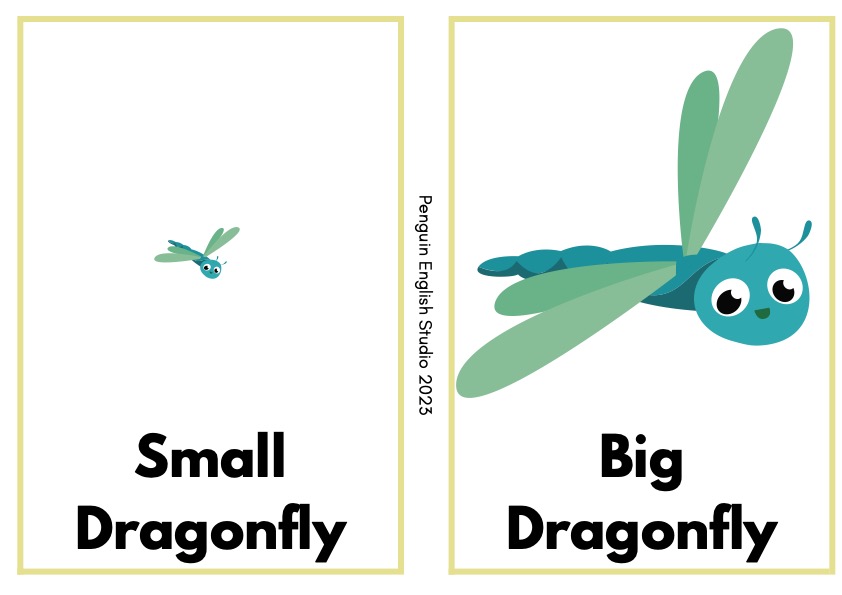
Guessing games work the same way. One student secretly picks a picture card, and the partner asks yes/no questions until they guess it. "Does it have wings?" "No, it doesn't." "Is it big?" "Yes, it is." With young learners, keep the question frame on the board so nobody gets stuck on how to ask.
Ranking and choosing tasks suit older students. Give a pair five items for a camping trip, and tell them they can only take three. They have to agree and then explain their choice to another pair. The final step matters, because it means they need the English reasons ready, not only the answer.
A good test for any pair task: could two students who share a first language finish it perfectly without speaking a word of English? If yes, redesign it.
Give students the words before they need them
Most drift happens in the gaps around the task, not in the task itself. Students can usually ask "Do you have a dog?" They often can't say "Wait, whose turn is it?" or "Can you say that again?"
Teach a small set of talk tools and keep them visible. Six to eight phrases is plenty:
- It's your turn. / It's my turn.
- Can you say that again, please?
- How do you say ___ in English?
- I think... / I don't think so.
- Wait a minute.
- We're finished!
Put them on a poster, a desk strip, or the back of the task card. Practice them as a whole class before the pair work starts, with you playing the confused partner so students have to use them.
Pre-teaching the task vocabulary helps too. If students need "under," "next to," and "behind" for an information-gap picture, do two minutes of quick practice first. If you want a fast way to warm up a word list, you can paste it into Wordlist Wonders, a free tool that turns one list into printable worksheets and projector games, and run a quick round as a class before students split into pairs.
One phrase deserves special attention: "How do you say ___ in English?" It gives students a sanctioned way to use their first language briefly, and it sends the conversation straight back into English. Praise it when you hear it.
Make English the easy choice, not the brave one
Even with a well-designed task, some students will hold back because speaking English in front of a friend feels risky. Lower that risk.
Shorten the time. Three minutes of focused talk beats ten minutes of drifting. Use a visible timer and stop pairs while they still have energy. You can always run a second round.
Rotate partners. Mixing first-language groups, where you can, makes English necessary. When you can't (in a monolingual class abroad, for example), changing partners still helps, because new pairs haven't settled into their usual chat yet.
Give each partner a role. In a group of three, for instance, one student asks, one answers, and one is the "checker" who listens and ticks off each question on a list. The checker has a real reason to listen closely, and the speakers know someone is paying attention.
Notice the English, not the slips. Walk around with a clipboard and write down good English you hear: a nice question, a full sentence, a good use of a talk tool. Read a few out at the end. Students quickly learn that the teacher is listening for English to celebrate, not for mistakes to punish.
Some teachers like a light-hearted system, such as a class "English points" jar that fills up when you catch pairs using English well. Keep it collective. Penalizing individual students for first-language use tends to make the quietest learners go silent rather than switch languages.
Adjusting this for different groups
Young learners (K-2) need concrete, hands-on tasks with one sentence pattern. Physical objects work especially well, because children have something to hold and point to while they talk. Keep partner tasks short, and model them with a puppet or a student volunteer first.
Mixed-level classes benefit from pairing a stronger and a weaker student on an information gap, with the stronger student holding the "answer" picture. They get practice explaining clearly, and their partner hears good models.
Tutoring and small groups can still use these ideas. Play the partner yourself, and take turns being the one with the hidden information. Children love catching their teacher out in a guessing game.
At home, parents can play the same guessing games at the dinner table with a few picture cards. No teaching background is needed, just the question frame written on a sticky note.
A ready-made task to try this month
If you teach young learners and want a hands-on information gap for late October, our Halloween Craft Paper Cubes set is built around exactly this idea. Children build paper cube monsters, describe them with "It has... / It doesn't have...," and then swap face pieces with a partner and describe the new monster. The set includes a Monster Parts word bank, a Talk About It grid with a partner frame, and a Guess My Monster! question game ("Does it have a tail? Yes, it does."). The language is deliberately narrow, which is what keeps children in English: they always know what to say next.
Start with one change this week. Take your next pair task, ask whether it could be finished without English, and if the answer is yes, add a gap. Then listen to the room.
Free this week
See all free →Print-and-go worksheets you can download now. No account needed.